
IRAS Audits & Record Requests: A Freelancer's Readiness Guide (Singapore, 2026)
An IRAS query or audit doesn't have to be scary—if your records are in order. This guide explains what triggers a review, the 5-year record-keeping rules for self-employed people, the penalties for getting it wrong, and a practical checklist to keep your books audit-ready all year round.
Disclaimer: This article is general information as of June 2026 and is not professional tax advice. For your situation, refer to the Inland Revenue Authority of Singapore (IRAS) or a qualified tax professional.
For most Singapore freelancers and small business owners, the word "audit" triggers a small wave of panic. It shouldn't. An IRAS query or audit is simply a check that the income and expenses you declared match reality—and if your records are tidy, it is a quick, undramatic process. The freelancers who lose sleep are the ones scrambling to reconstruct a year of receipts after the request lands. This guide shows you how to be the calm one.
What IRAS actually expects you to keep
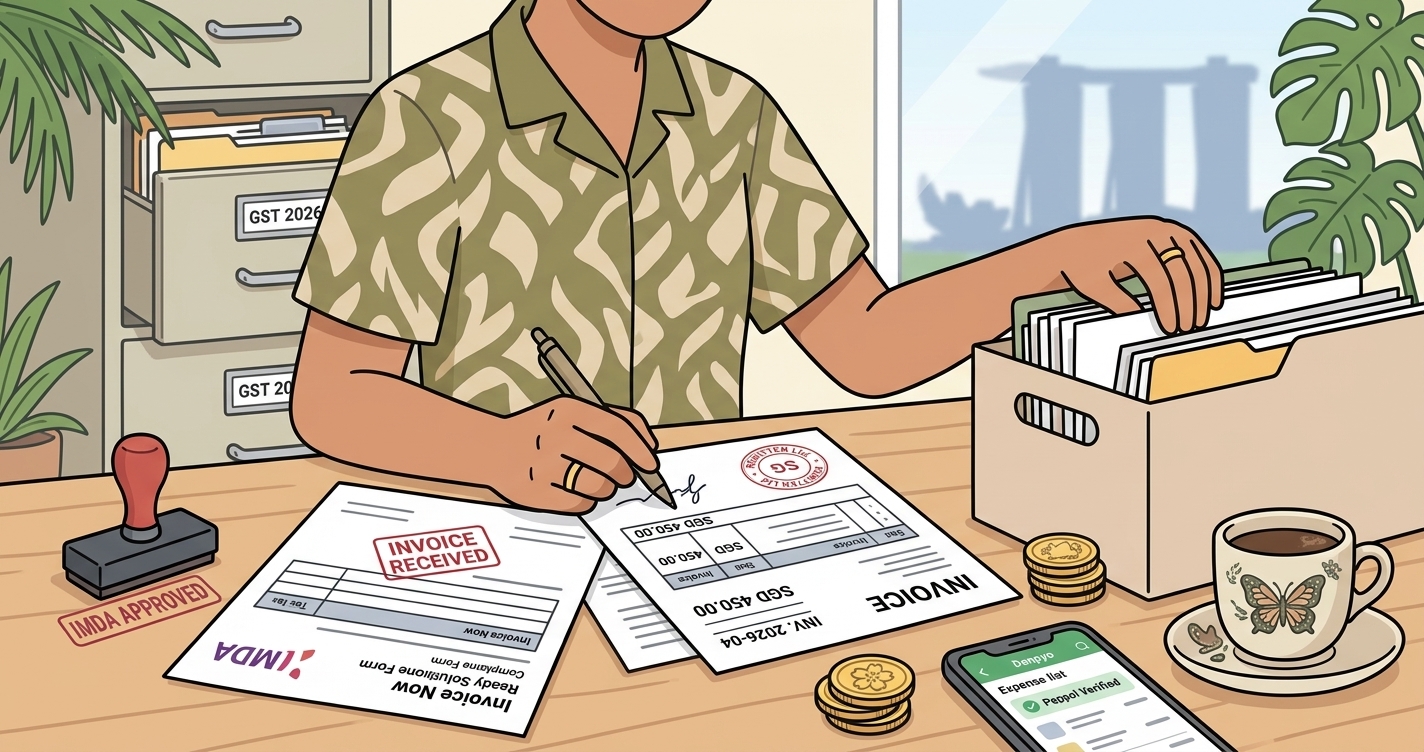
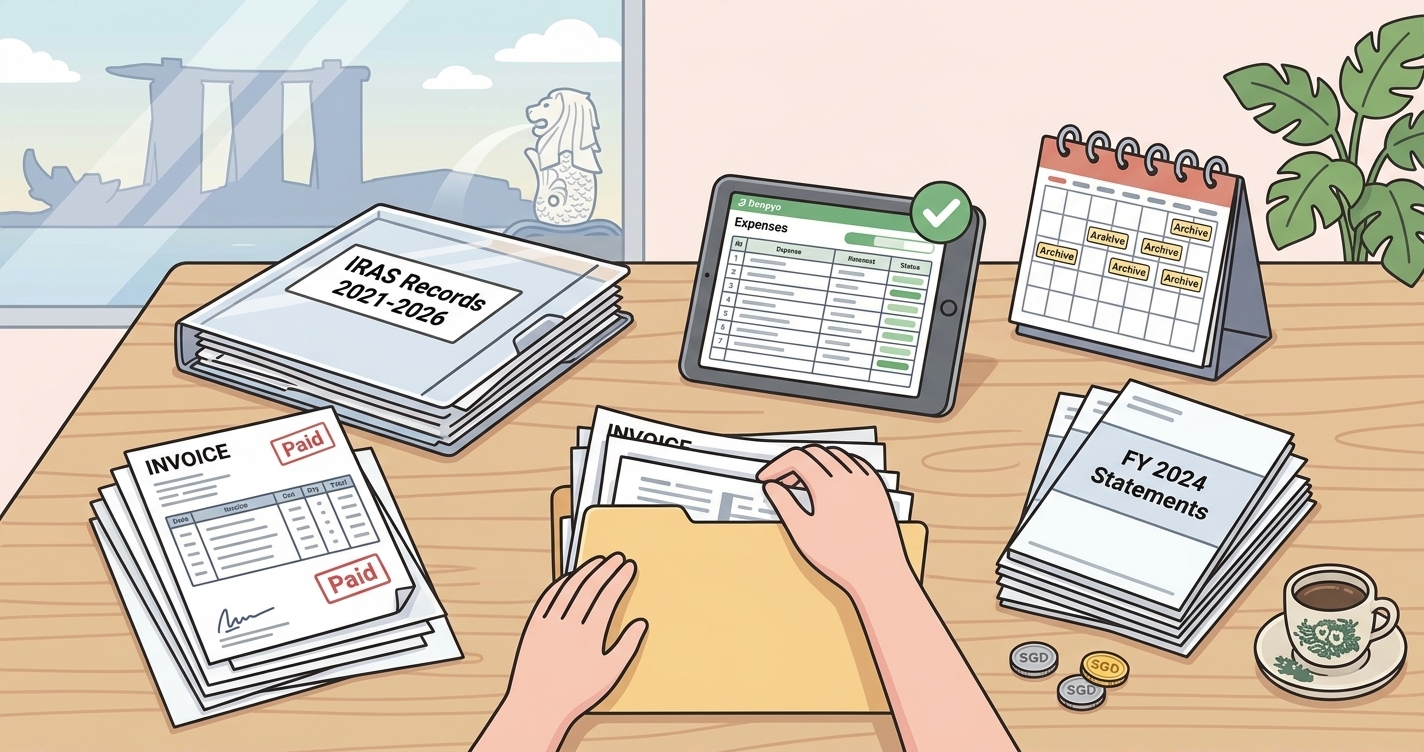
If you are self-employed—a sole proprietor, partner, or gig/platform worker—IRAS requires you to keep proper records and accounts of your business transactions for 5 years, so the income earned and expenses claimed can be readily verified. Your records must be supported by source documents such as invoices, receipts, vouchers and other supporting documents. In practice that means:
- Income records: invoices issued, receipts, and statements showing what clients paid you.
- Expense records: receipts and invoices for every cost you claim, with enough detail to show it was business-related.
- Asset purchases: records of equipment and other assets for capital allowance claims.
- Bank records: statements that let you reconcile money in and out, ideally from a separate business account.
Smaller businesses with annual revenue below the Simplified Record Keeping threshold can use lighter requirements, but the five-year retention and the need for supporting documents still apply.
What can trigger a review
Some audits are random, but many are prompted by patterns. Common triggers include:
- Declared income that looks low relative to your industry or visible activity
- Expenses or profit margins far outside the norm for your trade
- Figures that don't reconcile with third-party data IRAS already holds (for example, commission-paying platforms that report what they paid you)
- Round-number or inconsistent entries, or repeated late filing
- A sudden, unexplained swing in income or deductions year over year
None of these are accusations—they are simply prompts for IRAS to ask for more detail. Being able to answer with documents is the whole game.
The penalties for getting it wrong
This is why records matter. If you cannot substantiate your figures, IRAS may estimate your revenue, disallow your expense claims, capital allowances or GST input tax, and impose penalties of up to S$5,000, with imprisonment of up to 6 months in default of payment. Where a return is incorrect, the penalty depends on the cause—an honest, careless mistake is treated very differently from deliberate understatement or fraud, which carry far heavier surcharges.
Crucially, IRAS rewards coming forward. Under its voluntary disclosure approach, correcting an error before an audit begins typically results in significantly reduced penalties—or none at all. If you spot a mistake in a past return, it almost always pays to disclose it proactively rather than wait.
Your year-round audit-readiness checklist
The goal is simple: at any moment, you should be able to produce a clean trail for any figure on your return. Here is a practical routine:
- Separate your money. Use a dedicated bank account for business income and expenses so personal and business flows never tangle.
- Capture receipts immediately. A receipt photographed the day you get it never fades, gets lost in a wallet, or vanishes from your inbox.
- Reconcile monthly. Match your records to your bank statement once a month; a 30-minute habit beats a 30-hour year-end scramble.
- Note the business purpose. For client meals, travel and mixed-use costs, a one-line note on why it was business-related is your best defence.
- Keep digital backups. In 2026, scanned receipts and e-invoices (including via InvoiceNow) are the accepted standard—store them where they're searchable by date, amount and counterparty.
- Retain for five years. Archive each completed year rather than deleting it.
A quick scenario
Imagine IRAS asks you to support S$8,000 of "equipment and software" expenses from two years ago. The unprepared freelancer spends a weekend digging through emails and bank apps, and may still come up short. The prepared one opens a folder for that year, filters by category, and exports the receipts in minutes—claim substantiated, case closed. The difference isn't luck; it's a system maintained throughout the year.
How Denpyo keeps you audit-ready
Staying ready is far easier when capturing a record takes seconds. With Denpyo, you photograph a receipt or invoice and the AI extracts the date, amount, vendor, category and GST detail, filing everything so it's searchable when you—or IRAS—need it. Because each expense is categorised as you go, producing a clean, year-by-year trail is a matter of a few taps rather than a frantic reconstruction. To check whether a particular cost is claimable in the first place, try the expense checker, and estimate your bill with the income tax calculator.
Summary
An IRAS audit or record request is only stressful if you're unprepared. Keep proper records for five years backed by invoices and receipts, understand that thin or inconsistent figures invite questions, and remember that penalties for unsupported claims can reach S$5,000—while voluntary disclosure before an audit can wipe them out. Build a simple year-round routine: separate accounts, instant capture, monthly reconciliation and searchable digital storage. Do that, and an IRAS letter becomes a five-minute task instead of a weekend of dread.

Track expenses, maximize deductions
Denpyo scans your receipts and finds tax savings automatically.