
No GST in Hong Kong: What This Means for Your Freelance Business
Hong Kong is one of the few major economies with no GST or VAT. Learn how this tax-free advantage affects freelancers and small business owners — and how to make the most of it.
Disclaimer: This article is for general informational purposes only and does not constitute professional tax or legal advice. Tax laws are subject to change. Please consult a qualified tax advisor or the Hong Kong Inland Revenue Department (IRD) for guidance specific to your situation.
If you freelance or run a small business in Hong Kong, you enjoy a rare advantage that most of your peers in Singapore, Malaysia, or Europe do not: zero goods and services tax (GST). Hong Kong has no value-added tax (VAT), no sales tax, and no consumption tax of any kind. For freelancers, this has practical implications that go far beyond a single line item on an invoice.
In this guide, we will break down exactly what Hong Kong's GST-free status means for your pricing, invoicing, compliance burden, and cross-border competitiveness — and explain why it still matters to keep meticulous records even without a consumption tax to track.
Why Hong Kong Has No GST
Hong Kong operates under a deliberately simple, low-tax regime designed to attract international business. The territory levies only three direct taxes: profits tax, salaries tax, and property tax. There is no sales tax, no VAT, no GST, no capital gains tax, and no withholding tax on dividends or interest.
The government has explored introducing a GST several times — most notably in 2006, when a public consultation on a proposed 5% GST was shelved after significant public opposition. Since then, the idea has resurfaced periodically but has never progressed to legislation. As of 2026, there are no active proposals to introduce a consumption tax.
This policy is rooted in Hong Kong's identity as a free port with minimal barriers to trade — a philosophy that directly benefits freelancers and SMEs operating within the city.
How No GST Affects Your Freelance Pricing
In jurisdictions that levy GST or VAT, freelancers face an immediate pricing challenge: should you absorb the tax or pass it on to clients? In Singapore, for example, once your turnover crosses S$1 million, you must register for 9% GST and either add it to your invoices or eat the cost. In Malaysia, service tax at 8% applies to certain services above a threshold.
In Hong Kong, this problem simply does not exist. When you quote HK$10,000 for a project, the client pays HK$10,000 — no tax on top. This makes your pricing transparent and competitive, especially when bidding against freelancers in other markets who must factor in consumption taxes.
Practical example
Imagine a web designer quoting a client in three different cities:
- Hong Kong: Invoice = HK$50,000. Client pays HK$50,000.
- Singapore (GST-registered): Invoice = S$8,500 + 9% GST = S$9,265. Client pays more, or the freelancer absorbs the difference.
- Malaysia (SST-registered): Invoice = RM25,000 + 8% service tax = RM27,000.
The Hong Kong freelancer's price is exactly what it says — no hidden additions, no confusion about tax-inclusive vs. tax-exclusive amounts.
Simpler Invoicing and Compliance
In GST/VAT jurisdictions, freelancers must issue tax invoices that meet strict formatting requirements: a tax registration number, a breakdown of the tax amount, and often specific wording mandated by the tax authority. They must file periodic GST returns (monthly or quarterly), track input tax credits, and maintain detailed records of every transaction with the correct tax treatment.
In Hong Kong, none of this applies. Your invoices need to be clear and professional, but there is no government-mandated tax invoice format. You do not need a GST registration number. You do not file GST returns. There is no concept of input vs. output tax to reconcile.
This dramatically reduces the administrative overhead for a freelancer. According to the World Bank's Paying Taxes report, Hong Kong consistently ranks among the easiest jurisdictions in the world for tax compliance, partly because of its simple tax structure without indirect taxes.
What You Do Still Need to Pay
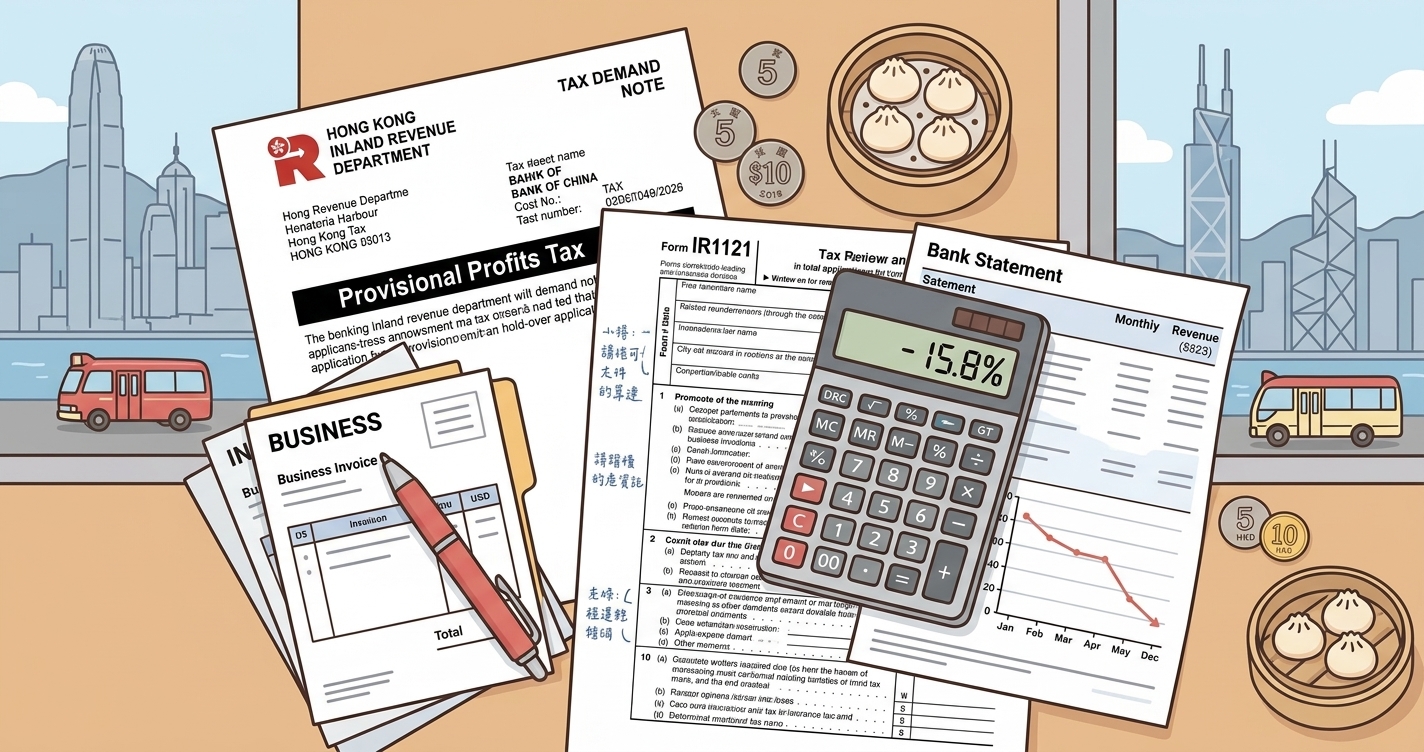
No GST does not mean no tax. As a freelancer or sole proprietor in Hong Kong, you are subject to profits tax on your net assessable profits:
- First HK$2 million of assessable profits: taxed at 7.5% (two-tiered rate)
- Above HK$2 million: taxed at 15%
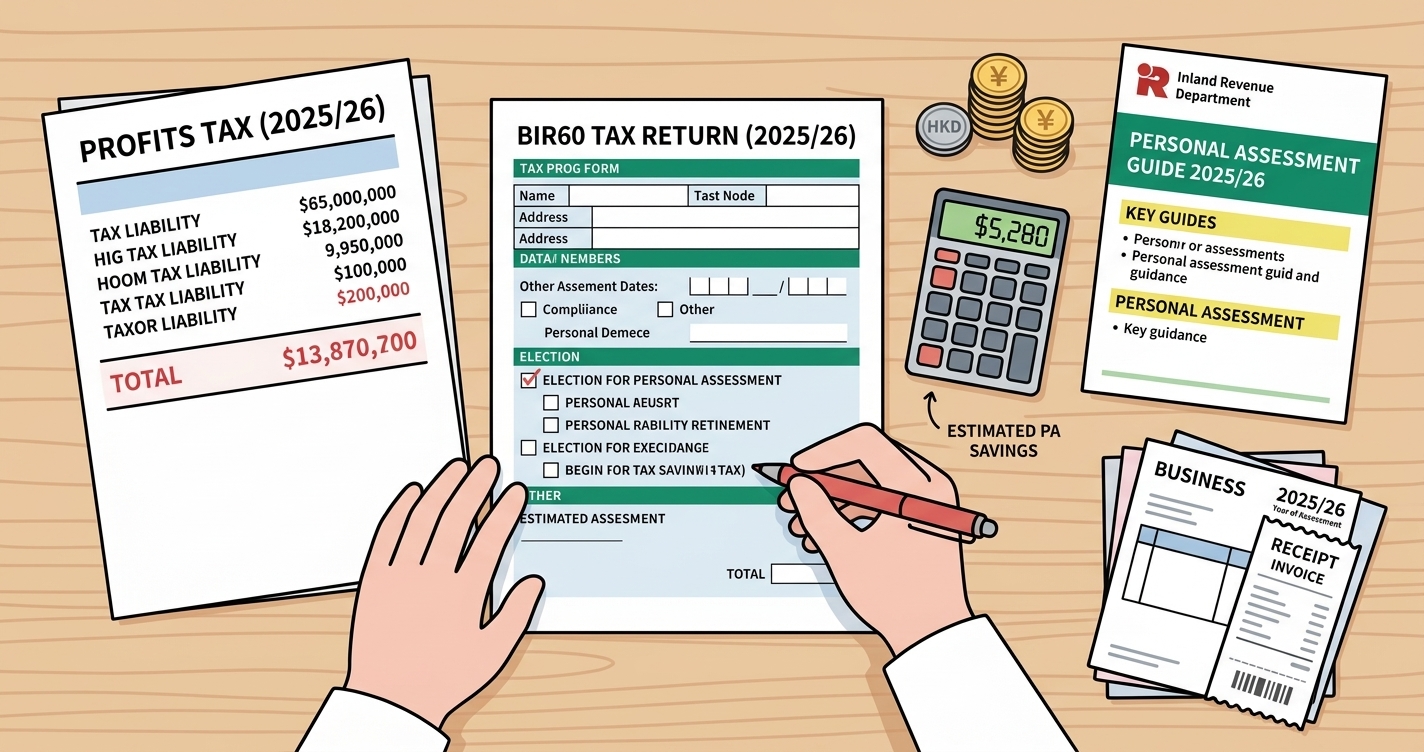
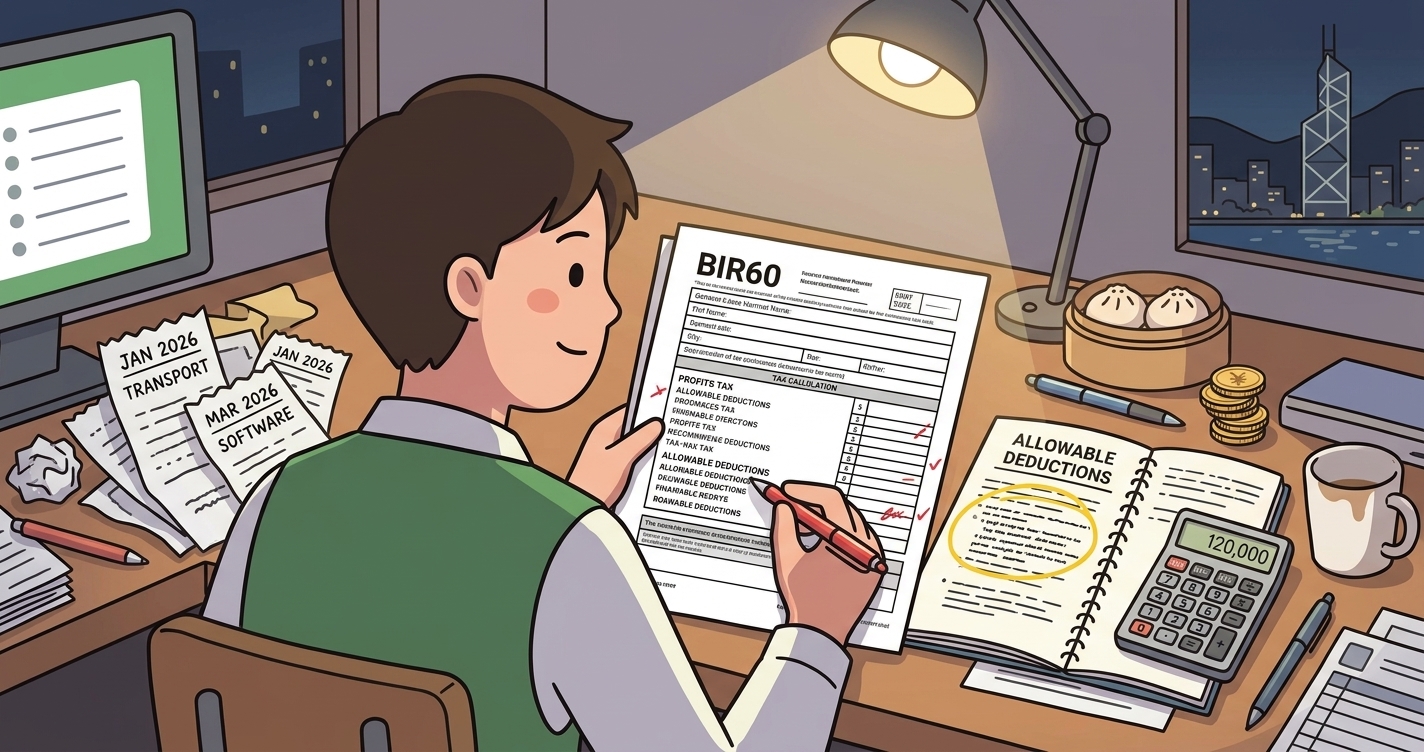
You file an annual tax return (BIR60) and pay profits tax on your business income minus allowable deductions. The key deductions include rent, utilities, equipment, travel, professional subscriptions, and home office expenses — all of which require receipts and records.
For the 2025/26 assessment year, the government has also announced a 100% tax rebate capped at HK$3,000, which further reduces your tax bill.
Cross-Border Advantages
If you serve international clients, Hong Kong's no-GST status gives you a competitive edge in several ways:
No reverse-charge headaches
When a Singapore-based freelancer invoices a client in Europe, both parties may need to deal with reverse-charge VAT mechanisms. EU clients may need to self-assess VAT on the service. Hong Kong freelancers avoid this entirely — there is no Hong Kong GST for anyone to account for in cross-border transactions.
Clean invoicing for international clients
Multinational clients appreciate the simplicity. When they receive an invoice from Hong Kong, there is no foreign GST to recover, no withholding to apply (Hong Kong has no withholding tax on service fees), and no complex tax reconciliation required. This makes you an easy vendor to work with.
Digital services stay tax-free
Many countries are introducing digital services taxes or requiring foreign freelancers to register for VAT when selling digital services to local consumers. Hong Kong imposes no such obligation on incoming or outgoing digital services. If you sell software, design, consulting, or creative work from Hong Kong, there is no consumption tax layer on either side of the transaction within Hong Kong.
The Trade-Off: No Input Tax Credits
One advantage GST-registered businesses enjoy in other jurisdictions is the ability to claim input tax credits — recovering the GST/VAT paid on business purchases. Since Hong Kong has no GST, there are no input credits to claim.
In practice, this trade-off almost always favors the freelancer. Here is why: input tax credits only offset the GST you have already charged and collected. You are essentially recovering tax you passed through, not receiving a net benefit. The compliance cost of tracking input credits, filing returns, and maintaining GST-compliant records typically outweighs the cash-flow benefit for small businesses.
For Hong Kong freelancers, the math is simpler: you pay no GST, you collect no GST, and you claim your business expenses as profits tax deductions instead. The deduction reduces your taxable profit directly at 7.5% or 15%, which is often a better outcome than a GST credit would provide.
Record Keeping Still Matters
Even without GST, the IRD requires you to keep adequate business records for at least 7 years. This includes receipts, invoices, bank statements, and any documents that support the income and expenses on your tax return. The IRD's record-keeping requirements are clear: failure to maintain records can result in fines up to HK$100,000.
The reason is simple: the IRD needs to verify your assessable profits during an audit. Even though you are not tracking GST input and output, you still need to prove that every deduction you claim is legitimate and supported by documentation.
This is where a digital receipt management tool becomes invaluable. Instead of shoving paper receipts into a drawer for seven years, tools like Denpyo let you photograph receipts on the spot and automatically extract the date, vendor, amount, and expense category using AI. The digital record is stored securely and organized for easy retrieval if the IRD ever comes knocking.
Could Hong Kong Introduce GST in the Future?
This is a question that surfaces every few years, especially when the government runs a fiscal deficit. The most recent serious discussion happened during the 2006 consultation, but the proposal was dropped. Since then, the government has relied on land premiums, stamp duty, and profits tax to fund public spending.
Economists periodically argue that Hong Kong's narrow tax base makes it vulnerable to economic shocks, and a broad-based consumption tax would provide more stable revenue. However, the political reality is that any GST proposal faces intense public resistance. The government's current stance shows no indication of change.
For freelancers, the practical takeaway is: enjoy the advantage while it lasts, but build your record-keeping habits as if a consumption tax could arrive one day. Maintaining organized, digital records means you would be ready to adapt quickly if the rules ever change.
Comparing Hong Kong to Neighboring Markets
To put the advantage in perspective, here is how Hong Kong's tax simplicity compares to its Wave 1 peers:
- Singapore: 9% GST applies once revenue exceeds S$1 million. GST-registered businesses must file quarterly returns and maintain tax invoices. Voluntary registration is possible below the threshold.
- Malaysia: Sales and Service Tax (SST) at 6–8% applies to specific services and goods. The MyInvois e-invoicing mandate (phased rollout through 2026) adds a digital compliance layer. Freelancers above certain thresholds must register.
- Hong Kong: No GST, no SST, no VAT, no consumption tax. Period.
This difference is a genuine competitive advantage for Hong Kong-based freelancers, particularly those competing for international clients who value simple, tax-efficient billing.
Making the Most of Hong Kong's Tax-Free Advantage
Here are practical steps to maximize the benefit of operating in a GST-free environment:
- Quote clean prices. Emphasize to clients that your invoices are GST-free — this is a selling point, not just an absence.
- Invest the compliance savings. The hours you do not spend on GST returns can go into growing your business or improving your services.
- Claim profits tax deductions aggressively. Since input tax credits are not available, make sure every legitimate business expense is captured and deducted against your profits tax. Use the Denpyo expense deductibility checker to verify which expenses qualify.
- Keep digital records for 7 years. The IRD's record-keeping requirement is the longest among the three Wave 1 markets. Go digital from day one to avoid the pain of paper storage.
- Monitor policy changes. Follow the annual Budget Speech (usually in February) for any signals about consumption tax proposals.
Summary
Hong Kong's zero-GST environment is one of the most freelancer-friendly tax features in Asia. It simplifies your pricing, eliminates an entire category of compliance work, gives you a competitive edge with international clients, and keeps your invoicing clean and transparent. The trade-off — no input tax credits — is negligible for most freelancers since the compliance savings far outweigh any credit benefit.
That said, no GST does not mean no obligations. You still owe profits tax on your net income, you still need to file your BIR60 return, and you still need to keep records for seven years. The difference is that your record-keeping can focus purely on substantiating your income and deductions, without the added complexity of tracking consumption tax flows.
If you want to stay organized without the hassle of manual bookkeeping, consider using a receipt digitization tool to capture expenses as they happen. The 7-year retention clock starts ticking the moment you earn income — it is never too early to build good habits.

Track expenses, maximize deductions
Denpyo scans your receipts and finds tax savings automatically.