
Hong Kong Profits Tax Guide for Freelancers and Small Businesses 2026
Hong Kong's 15-16.5% Profits Tax rate is competitive, but only if you know what to deduct. This guide covers filing, deductions, MPF, and real examples for freelancers and SMEs.

Disclaimer: This article provides general information about Hong Kong tax obligations. It is not professional tax, legal, or financial advice. For your specific situation, please consult a qualified tax advisor or certified public accountant. Disclosure: This article is published on the Denpyo blog. Denpyo provides receipt management and expense tracking services.
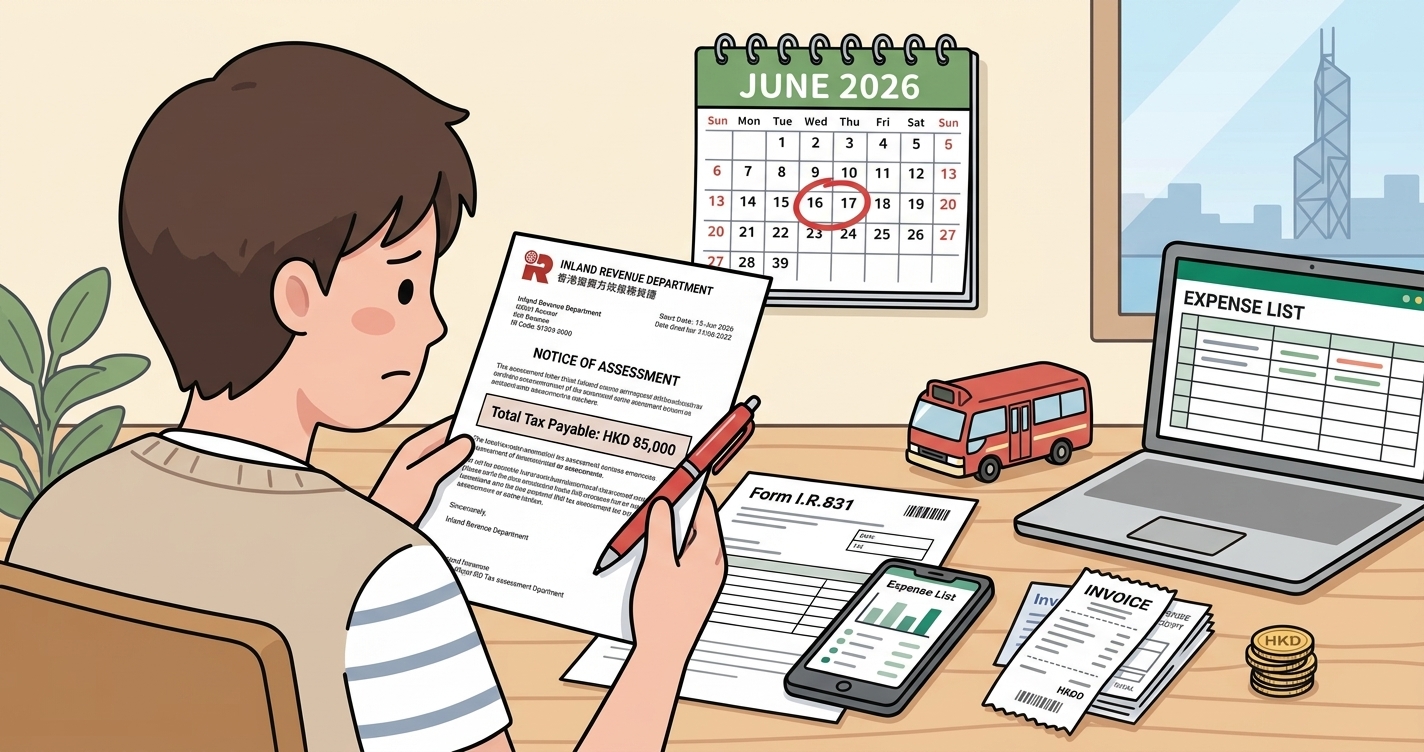
You're earning good money as a freelancer or running a small business in Hong Kong—but come tax season, panic sets in. How much are you actually supposed to pay? What can you deduct? And why does the filing process feel like deciphering ancient hieroglyphics?
Here's the thing: Hong Kong's Profits Tax system is actually more straightforward than you'd think, but only if you know the rules. Whether you're a solo graphic designer pulling in HK$600,000 a year or a small marketing agency with three employees and HK$2.8 million in revenue, understanding your tax obligations isn't just about staying compliant—it's about keeping more of what you earn.
Understanding Hong Kong Profits Tax
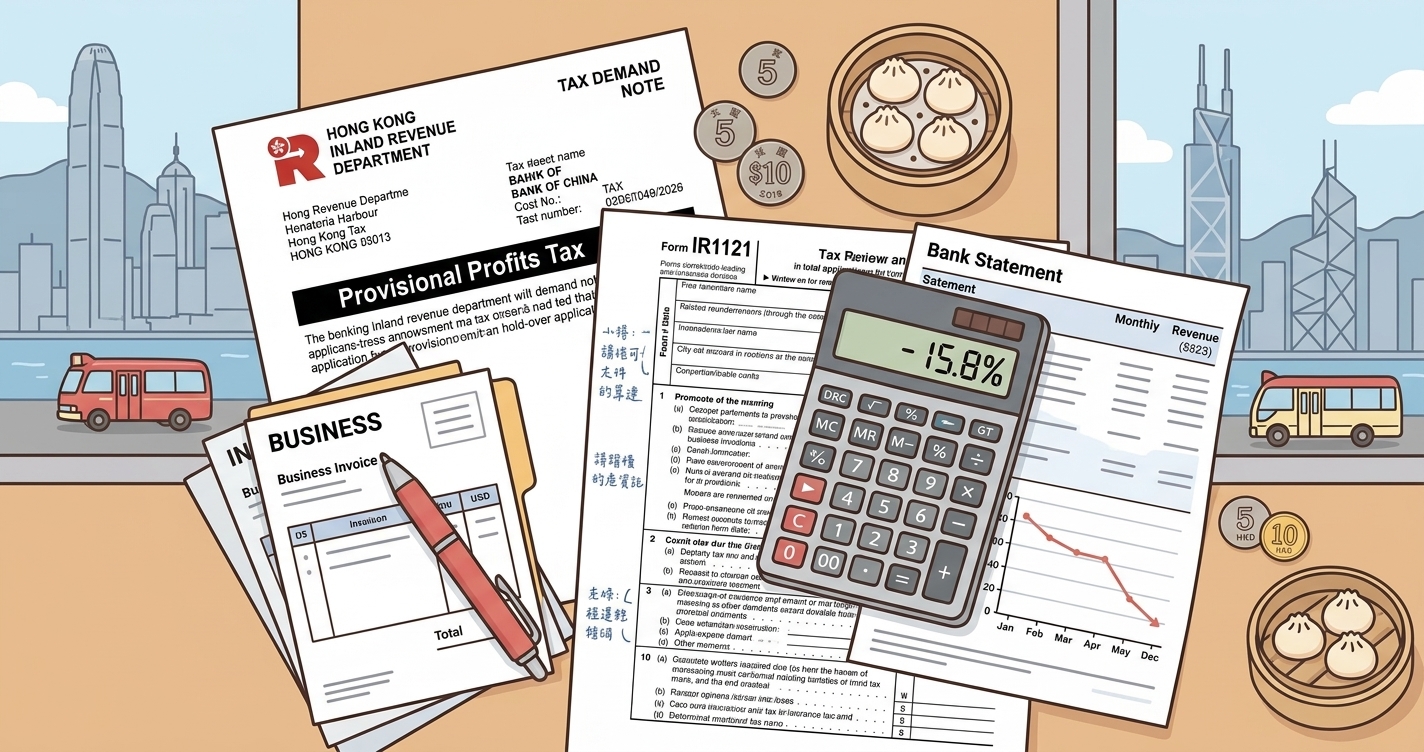
First, the good news: Hong Kong has one of the world's most competitive profits tax rates. At just 16.5% for companies and 15% for unincorporated businesses (sole proprietorships and partnerships), it's significantly lower than most developed economies.
The Two Tax Rates:
- Corporations: 16.5% flat rate
- Unincorporated Businesses (sole traders, partnerships): 15% flat rate
There's no progressive bracket system—everyone pays the same percentage. And importantly, Hong Kong has no VAT or GST. Your clients don't pay extra tax on your services, and you don't have to collect and remit sales tax. That's a major advantage over Singapore (9% GST) and Malaysia (6-8% SST).
Hong Kong's tax system is also territorial. You only pay profits tax on income sourced in Hong Kong. Income from overseas clients held abroad is generally not taxable.
Who Needs to File
The IRD requires both freelancers and businesses generating Hong Kong-sourced income to file. There's no income threshold—even HK$100,000 is reportable.
You must file if:
- You're self-employed or a sole proprietor earning income from a trade or profession in HK
- You run a partnership or company registered in Hong Kong
- You've received a BIR60 tax assessment from the IRD
Registration: Register with the IRD using Form IR604. The annual fee is HK$2,200. See the government business registration portal for details.
Allowable Business Deductions
Here's where you can save serious money. The golden rule: any expense incurred wholly and exclusively to generate business income is deductible.
- Salaries and Staff Costs: If you hire employees, salaries, bonuses, and MPF contributions are fully deductible. This is why SMEs see a huge tax benefit from reinvesting in people.
- Rent: Office, studio, or co-working space. Home office? Claim 10-30% of rent based on workspace area.
- Software and Subscriptions: Adobe, Figma, Slack, CRM systems, accounting tools.
- Professional Fees: Accountant, lawyer, consultant. Yes, your accountant's fees are deductible.
- Marketing: Website hosting, Google Ads, social media, business cards.
- Equipment: Computers, cameras, tools. 60% initial depreciation allowance, then 20-30% annually.
- Insurance: Professional indemnity, public liability, business property.
- Travel: Client meetings, conferences, business trips (not daily commute).
- Entertainment: Client meals (50% deductible). Must be documented.
Use our expense deductibility checker to verify if a specific purchase qualifies. For complex deduction planning, consider consulting firms like Deloitte Hong Kong tax advisory or KPMG tax insights, or find a qualified CPA through the Hong Kong Institute of CPAs.
Worked Example 1: Solo Freelance Designer
Sarah earns HK$600,000 from Hong Kong clients:
- Home office rent (40%): HK$86,400
- Software & tools: HK$12,000
- Equipment depreciation: HK$9,000
- Insurance: HK$4,800
- Training: HK$6,000
- Transport: HK$8,000
- Total deductions: HK$126,200
Taxable profit: HK$473,800 × 15% = HK$71,070 tax
Every HK$1,000 in deductions saves HK$150 in tax. Try our tax savings estimator to see your potential savings.
Worked Example 2: Small Marketing Agency
David's agency earns HK$2.8M with 3 employees:
- Staff costs & MPF: HK$960,000
- Office rent: HK$180,000
- Software & tools: HK$60,000
- Marketing & business dev: HK$40,000
- Professional fees: HK$30,000
- Total deductions: HK$1,270,000
Taxable profit: HK$1,530,000 × 16.5% = HK$252,450 tax
Notice how staff costs dramatically reduce the tax burden—reinvesting in people is tax-efficient in Hong Kong.
Filing Your BIR60 via eTAX
File online via the IRD's eTAX portal. It's faster, gives you instant confirmation, and earns you an extra month to file.
Timeline: BIR60 forms issued in May, paper deadline June-August, e-filing deadline approximately one month later. Late filing triggers penalties starting at HK$10,000.
What you'll need:
- Profit and loss statement
- Supporting receipts for all deductions
- Bank statements showing income and expenses
- Employee records and MPF statements (if applicable)
- Depreciation schedules for equipment
Pro tip: Hiring a tax accountant (HK$3,000-8,000) is itself deductible. They'll identify deductions you'd otherwise miss.
MPF Contributions and Tax Relief
If you have employees, register with the Mandatory Provident Fund Authority (MPFA) and contribute 5% of each employee's salary (capped at HK$1,500/month). Your employer contributions are fully tax-deductible.
David's agency with 3 employees earning HK$25,000 each contributes HK$4,500/month total to MPF—that's HK$54,000 in annual deductions.
Self-employed? You can join a voluntary MPF scheme for retirement security, though contributions aren't tax-deductible.
Record Keeping: 7 Years, No Exceptions
The IRD requires all business records for 7 years. If audited without documentation, expect penalties and reassessment.
Keep: Invoices, expense receipts, bank statements, contracts, employee records, depreciation schedules, and correspondence with the IRD.
Digital is fine: The IRD accepts scanned receipts and accounting software records. Use cloud storage to maintain a searchable 7-year archive.
How Denpyo Helps
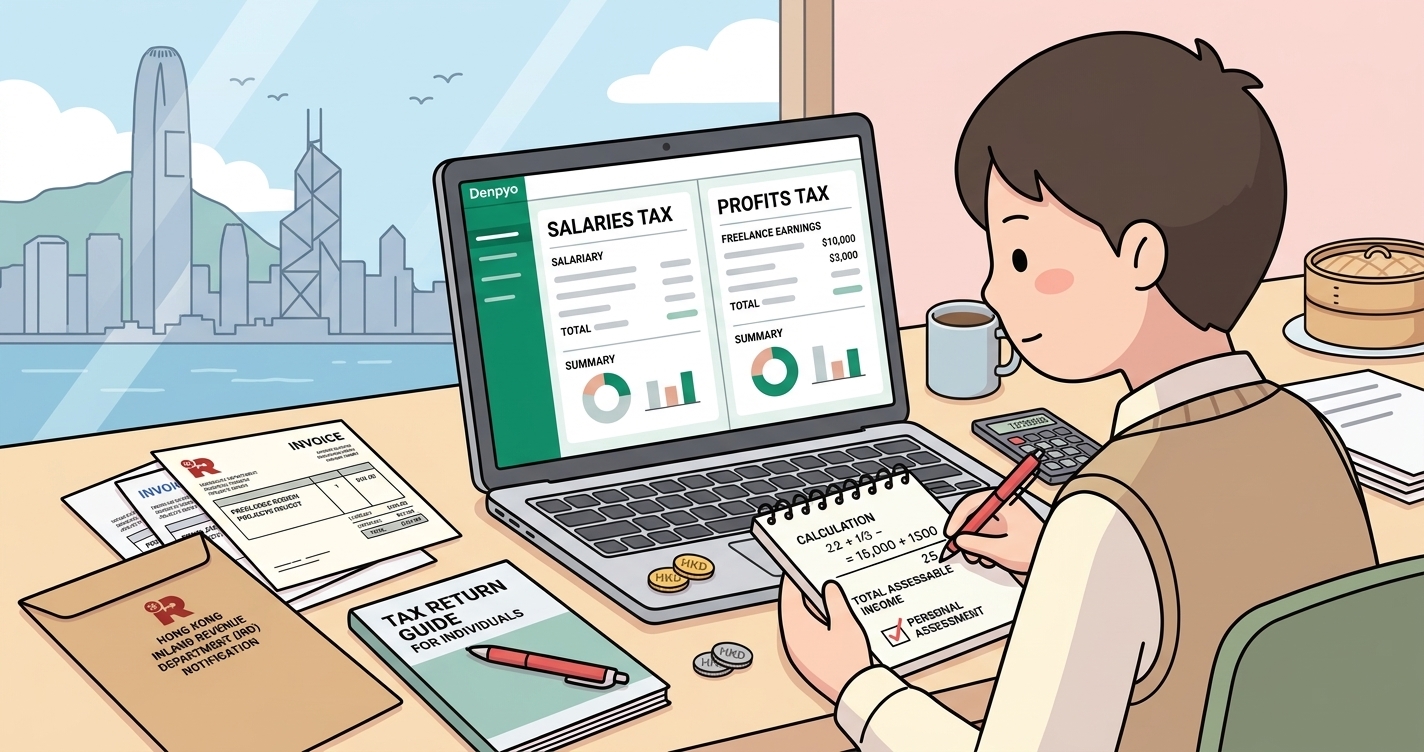
Whether you're a solo freelancer or managing a small team, Denpyo takes the friction out of tax prep. Photograph receipts on your phone, and AI extracts the date, vendor, amount, and category automatically. Everything's organized into a searchable archive that meets the IRD's 7-year retention requirement. You'll also see estimated tax savings in real time—so you know exactly how each deduction impacts your bottom line. Try our free tax savings estimator or deductibility checker to get started.
Key Takeaways
- 15-16.5% Profits Tax is globally competitive. No VAT/GST on top. See the IRD's full rate guide.
- Both freelancers and businesses must file if generating HK-sourced income.
- Claim every deduction: Software, equipment, rent, staff costs, professional fees. Sarah saves HK$19,000; David saves HK$210,000.
- File via eTAX for the extra month and instant confirmation.
- Keep records for 7 years. Digital copies are accepted.
- MPF employer contributions are deductible. Factor this into your payroll budget.
- When in doubt, hire an accountant. The cost is deductible and often pays for itself in missed deductions found.

Track expenses, maximize deductions
Denpyo scans your receipts and finds tax savings automatically.