
InvoiceNow Mandate 2026: What Every Singapore Freelancer Needs to Know
Singapore's InvoiceNow e-invoicing requirement is expanding in 2026. Learn what it means for your freelance business, the timeline, and how to prepare.
Disclaimer: This article provides general information about Singapore's InvoiceNow mandate. It is not legal or accounting advice. For specific guidance on your GST registration or e-invoicing obligations, please consult the IRAS official InvoiceNow page or a qualified tax professional.
What is InvoiceNow?
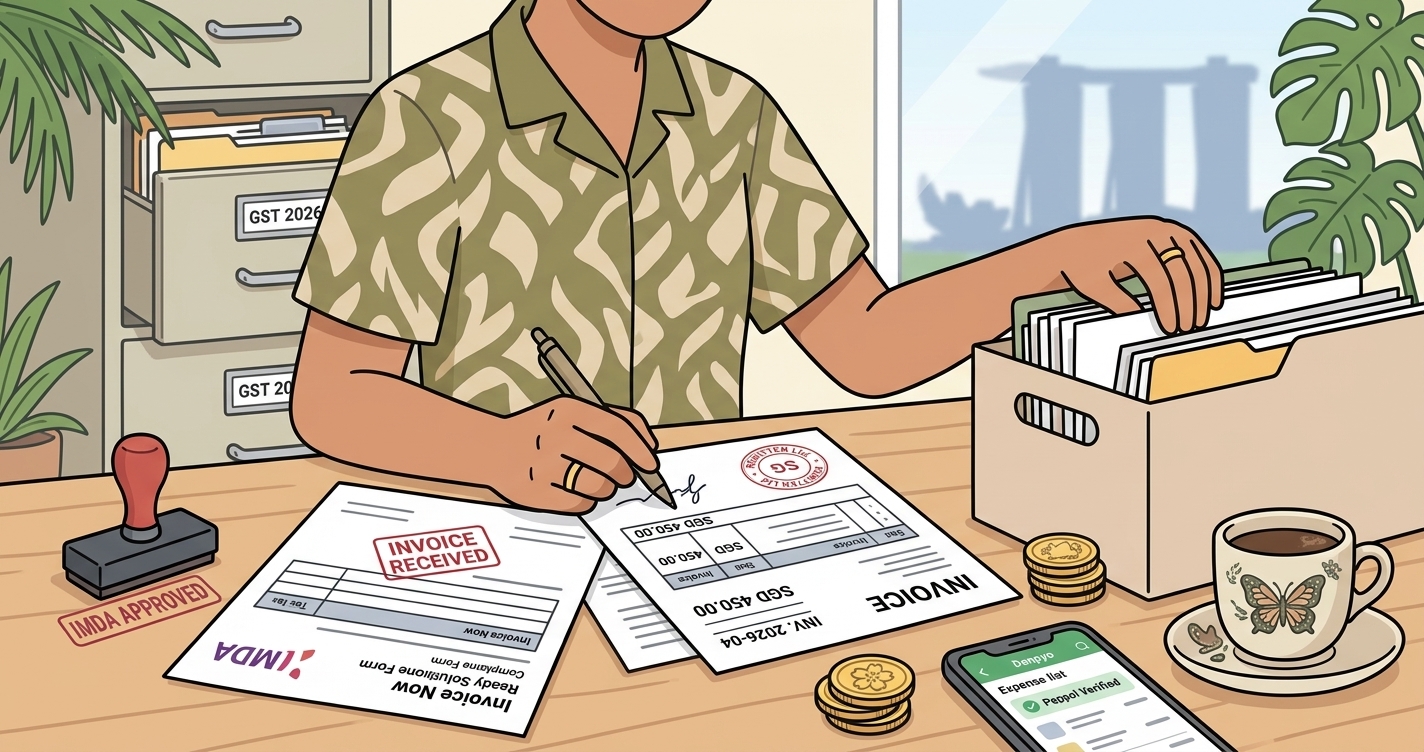
InvoiceNow is Singapore's nationwide e-invoicing network, launched by the Infocomm Media Development Authority (IMDA) in 2019. It's built on the Peppol standard—a global framework that enables secure, structured exchange of invoices between businesses electronically. Rather than sending PDF invoices via email, InvoiceNow allows you to transmit invoice data in a standardized XML format directly to your customers' systems and to the Inland Revenue Authority of Singapore (IRAS).
Think of it as Singapore's digital highway for invoicing. Just as every car on the road follows the same traffic rules, every business on InvoiceNow follows the same invoice format and transmission standards.
Why the Mandate Matters Now
For years, InvoiceNow adoption was voluntary. However, starting in 2026, the Singapore government is making e-invoicing compulsory for many businesses. This shift reflects a global trend: countries like the EU, Brazil, Mexico, and Australia have already moved to mandatory e-invoicing to streamline tax administration, reduce fraud, and cut compliance costs.
The IRAS has made clear that all GST-registered businesses will eventually be required to use InvoiceNow. The rollout is phased to give businesses time to adapt.
The Timeline: When Does It Apply to You?
The InvoiceNow mandate is being introduced in waves:
- November 1, 2025: Businesses incorporated less than 6 months ago that voluntarily register for GST must send invoice data via InvoiceNow.
- April 1, 2026: All new voluntary GST registrants, regardless of business structure or incorporation date, must comply.
- April 1, 2028: Businesses with annual supplies ≤S$200,000 must comply.
- April 1, 2029: Businesses with annual supplies ≤S$1,000,000 must comply.
- April 1, 2030: Businesses with annual supplies ≤S$4,000,000 must comply.
- April 1, 2031: All remaining GST-registered businesses must comply.
Are You Already Affected?
If you are a freelancer or sole proprietor who registered for GST voluntarily (before reaching the S$1 million turnover threshold), you likely fall into the April 2026 category. Check your GST registration letter to confirm your registration type and date.
Who Must Comply?
The mandate applies to businesses that are:
- GST-registered in Singapore
- Issuing invoices to customers in Singapore
Exclusions: Overseas entities and entities covered by the Reverse Charge regime are exempt from the InvoiceNow requirement.
If you're a freelancer earning below S$1 million per year and haven't voluntarily registered for GST, you can remain outside the mandate until (and possibly beyond) April 2031. However, if you do register for GST voluntarily—to claim input tax credits, for example—you'll need to use InvoiceNow immediately if you register from April 1, 2026.
How to Comply: Step-by-Step
Step 1: Register for a Peppol ID
To send invoices via InvoiceNow, you need a Peppol ID—a unique identifier that routes your invoices to the right recipients. You obtain this through an IMDA-accredited Access Point. The good news: most of these services are free or low-cost for SMEs and freelancers.
Step 2: Choose an InvoiceNow-Ready Solution
You have two main options:
- Use an accredited InvoiceNow-Ready Solution: These are accounting software, invoicing platforms, and ERP systems that have been certified by IMDA to send invoices in the correct PINT-SG format (Singapore's localized Peppol standard). Examples include many popular accounting tools used by Singapore businesses.
- Connect through an Access Point: If your current invoicing tool isn't InvoiceNow-Ready, you can connect via an accredited Access Point provider, which acts as an intermediary.
Step 3: Update Your Invoicing Workflow
Instead of emailing PDF invoices, you'll transmit invoice data in structured XML format. Most InvoiceNow-Ready Solutions handle this automatically—you enter invoice details as usual, and the system formats and sends them electronically. The change is mostly behind the scenes.
Step 4: Ensure Your Customers Are Ready
Your customers also need to be able to receive InvoiceNow invoices. Most GST-registered businesses will have Access Points or InvoiceNow-Ready systems in place. However, some smaller freelancers and unregistered businesses may still accept invoices via email or PDF. IRAS allows a transition period: you can still send traditional invoices to customers not yet ready to receive e-invoices, as long as you send the same invoice data to IRAS via InvoiceNow.
Government Support: Subsidies and Free Tools
The Singapore government is making it affordable to upgrade:
- SME subsidy: Up to S$1,000 for small and medium enterprises to adopt InvoiceNow-Ready Solutions.
- Larger business subsidy: Up to S$5,000 for bigger businesses.
- Free access until 2031: SMEs can use InvoiceNow-Ready Solutions for free until March 31, 2031, reducing your upfront cost.
Check with IMDA or your software provider for available grants and programs in your region.
What This Means for Freelancers
If you're a freelancer in Singapore, here's why InvoiceNow matters:
- Compliance is non-negotiable: Missing the deadline can result in penalties from IRAS. Plan ahead and implement your solution before your mandatory compliance date.
- Record-keeping becomes easier: E-invoicing creates a digital audit trail. You'll have structured records of every invoice, payment, and GST transaction in one place.
- GST claims are streamlined: If you claim input tax credits (for business expenses), the structured format makes it easier for IRAS to verify and process your claims faster.
- Cash flow visibility improves: Many InvoiceNow-Ready solutions include payment tracking and reminder features, helping you chase unpaid invoices more efficiently.
- Professional image: Sending e-invoices signals to clients that you're modern, compliant, and serious about your business.
Preparing Your Invoicing System
Here are practical steps to get ready:
- Audit your current invoices: Ensure they include all required fields (invoice number, date, customer details, line items, GST breakdown, your Peppol ID). Tools like Denpyo can help you keep digital records that integrate smoothly with e-invoicing workflows.
- Test before the deadline: If you've chosen a new solution, test it thoroughly with a few sample invoices 2–3 months before your compliance date.
- Train your team (if any): Ensure anyone helping with invoicing understands the new system and the InvoiceNow requirements.
- Keep a backup process: Have a fallback plan in case the system goes down (e.g., temporarily reverting to PDF invoices while you troubleshoot).
- Document your GST records: Use your invoicing system to generate monthly or quarterly GST reports. Many solutions do this automatically.
Estimating Your Compliance Costs
The financial impact depends on your current system:
- If using free or low-cost invoicing tools: You may need to switch to an InvoiceNow-Ready solution. The SME subsidy and free access until 2031 significantly reduce the cost.
- If using accounting software (e.g., Xero, Wave, etc.): Check whether your provider has already integrated InvoiceNow compliance. Many have at no extra cost.
- If using an Access Point: You'll likely pay a small monthly or per-invoice fee, but this may still be cheaper than buying new software outright.
Use Denpyo's expense deductibility checker to identify business software costs that can be claimed as deductions, reducing your taxable income.
Real-World Example: A Singapore Freelance Consultant
Imagine you're a freelance business consultant in Singapore earning S$600,000 per year. You voluntarily registered for GST to claim input tax credits on professional services and software. Under the new mandate:
- Your compliance date is April 1, 2026 (new voluntary GST registrants).
- You need to choose an InvoiceNow-Ready Solution and obtain a Peppol ID by March 31, 2026.
- From April 1, 2026, every invoice you send to customers must be transmitted via InvoiceNow in PINT-SG format.
- You still send traditional invoices to overseas clients (not subject to Singapore GST).
- IRAS sees all your invoice data in real time, making your GST filings faster and more transparent.
Common Questions
Do I need to change my invoicing format?
From an end-user perspective, not much. You'll still create invoices with the same information (client name, amount, description, etc.). The backend format changes to XML for transmission, but your software handles that automatically.
Can I still email PDF invoices to clients?
You can send a PDF copy to clients for their records. However, you must also send the same invoice data to IRAS via InvoiceNow. Some customers may prefer not to receive e-invoices (particularly overseas clients or unregistered sole proprietors), and that's acceptable—but IRAS still needs the InvoiceNow transmission from you.
What if my software provider hasn't added InvoiceNow support?
Contact them immediately to ask about their roadmap. Most established providers are adding support by late 2025 or early 2026. If they're slow, consider switching to an accredited provider. The government grants and free trials make this financially feasible.
Are there penalties for non-compliance?
Yes. IRAS has the authority to impose penalties on businesses that fail to comply with the InvoiceNow mandate after the applicable deadline. Penalties can range from warnings to financial fines depending on the severity and duration of non-compliance.
Looking Ahead
The InvoiceNow mandate reflects Singapore's push toward digital, transparent tax administration. As a freelancer, complying now sets you up for long-term success: cleaner records, faster GST processing, better cash flow visibility, and peace of mind that you're meeting regulatory expectations.
The government has provided subsidies, free tools, and a phased timeline specifically to ease the transition. Take advantage of these resources.
Summary
Here's your action checklist:
- Confirm your GST registration status: Determine when your InvoiceNow compliance deadline applies.
- Research accredited solutions: Visit IMDA's list of InvoiceNow-Ready Solutions and Access Points.
- Get a Peppol ID: Register with an accredited Access Point provider.
- Test your new system: Start early so you're confident before the deadline.
- Update your record-keeping: Ensure your invoicing system captures all required fields for GST compliance.
- Apply for subsidies: Take advantage of government grants if eligible.
- Plan for 2026: If you're a new voluntary GST registrant, April 1, 2026 is your deadline.
InvoiceNow is not a threat—it's an opportunity to professionalize your freelance business and simplify your tax obligations. Start preparing today, and you'll be well ahead of the curve.

Track expenses, maximize deductions
Denpyo scans your receipts and finds tax savings automatically.
More Articles
View All Articles
Side Income Tax in Hong Kong: Reporting Freelance Earnings Alongside Your Job (2026)
6 min read
Personal Assessment in Hong Kong 2026: Can It Lower Your Tax Bill?
5 min read