Philippines Freelancer Tax Guide 2026: BIR Registration, Filing Deadlines, and the 8% Rule
Sign up free to read the full article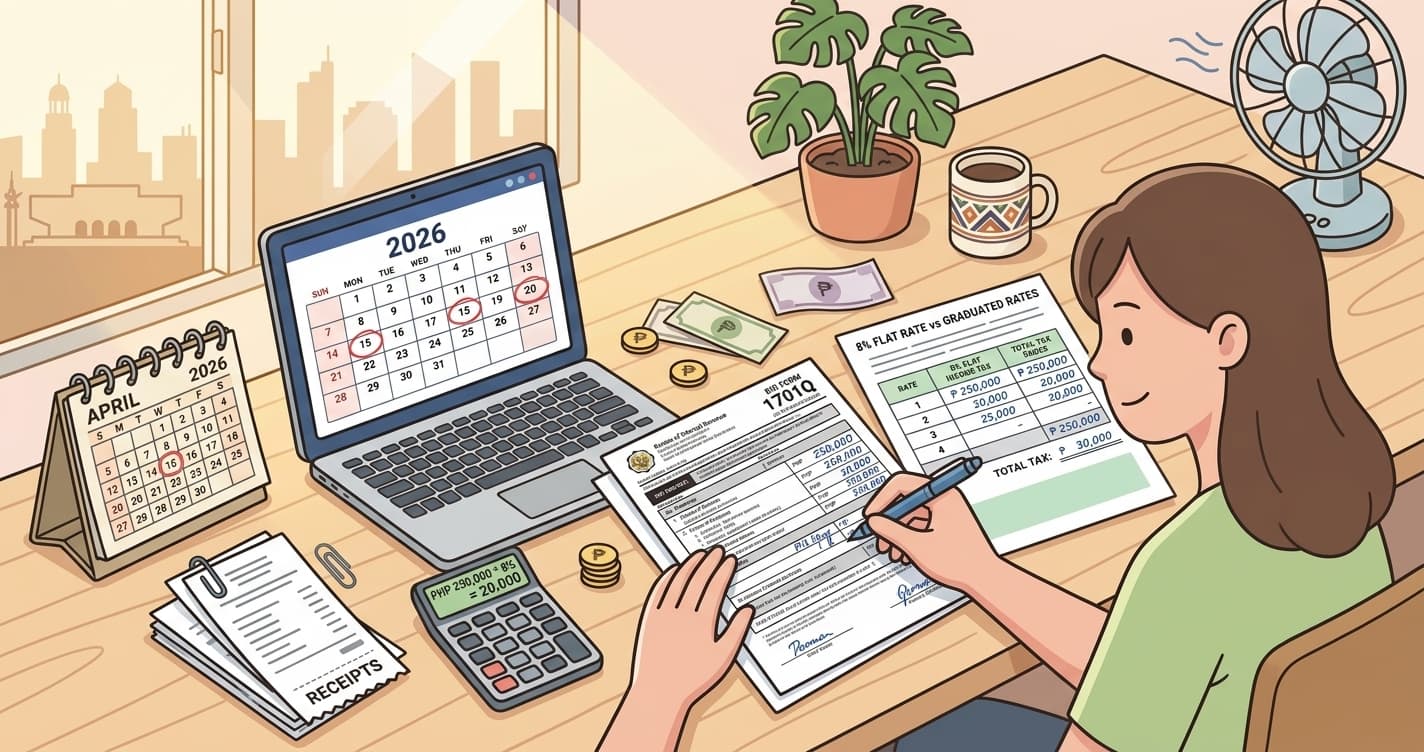
Disclaimer: This article provides general information only and is not individual tax or legal advice. Tax laws change frequently. Always verify requirements with the Bureau of Internal Revenue (BIR) or a licensed Certified Public Accountant (CPA) in the Philippines.
Freelancing in the Philippines is booming — from remote workers serving international clients to local content creators, consultants, and online sellers. Yet many Filipino freelancers remain unregistered with the Bureau of Internal Revenue (BIR), leaving them exposed to penalties that can far exceed the taxes they would have owed. Whether you bill in pesos or receive USD through PayPal, your income is taxable in the Philippines.
This guide walks you through everything you need to know: BIR registration, your tax options, filing deadlines, and how to reduce your tax burden — all explained in plain language for freelancers and small business owners.
Who Needs to Register with the BIR?
If you earn income from freelancing, consulting, online selling, or any self-employed activity — even part-time — you are legally required to register with the BIR and pay income tax. This applies regardless of whether your clients are local or overseas.
Key registration requirements:
- Fill out BIR Form 1901 (Application for Registration for Self-Employed)
- Submit to the Revenue District Office (RDO) where your business is located
- Provide a valid government ID and proof of address
- Pay the ₱30 documentary stamp tax (the ₱500 annual registration fee was abolished in 2024)
- Apply for Authority to Print (ATP) official receipts if issuing receipts to clients
Once registered, you receive a Certificate of Registration (COR) listing your tax obligations, registration deadlines, and official receipt details.
Choosing Your Tax Option: 8% vs Graduated Rates
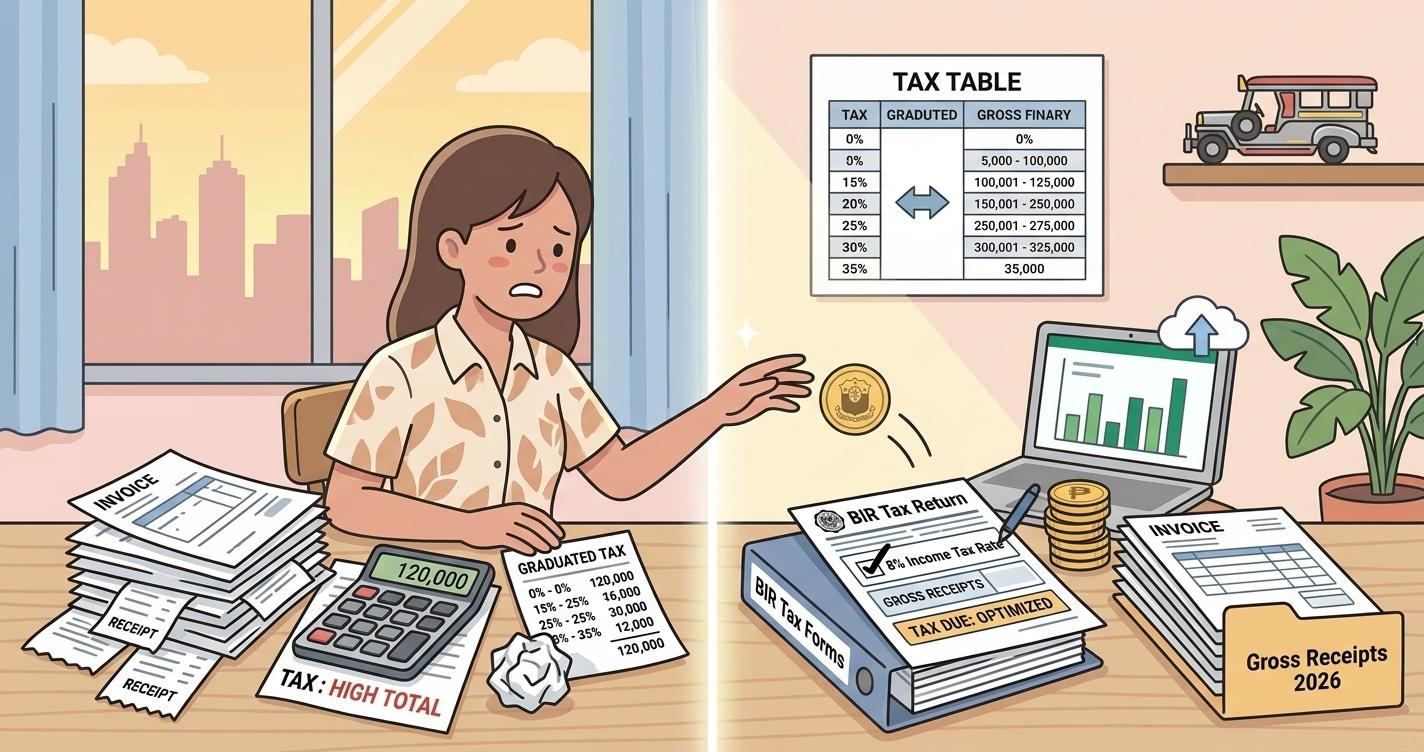
This is the single most important tax decision you will make as a freelancer. The Philippines offers two main income tax options for self-employed individuals with gross annual receipts not exceeding ₱3,000,000:
Option 1: 8% Flat Income Tax Rate
Pay a flat 8% on your gross receipts or sales in excess of ₱250,000. This is the simpler option — no itemized deductions, no separate Percentage Tax (3%) to file, and far less bookkeeping.
- Eligibility: Gross receipts do not exceed ₱3,000,000 for the year
- Rate: 8% on gross receipts minus ₱250,000 (the annual exemption)
- Advantage: Simple calculation, no need to track expenses for deductions
- Disadvantage: Cannot deduct business expenses; you pay tax on gross, not net income
- File using: BIR Form 1701A (Annual Income Tax Return for Self-Employed)
Example: If your gross receipts total ₱600,000 in a year, your income tax is 8% × (₱600,000 − ₱250,000) = ₱28,000.
Option 2: Graduated Tax Rates with Itemized Deductions
Use the progressive tax brackets (0%–35%) on your net taxable income after…
Read the rest of this article
Create a free Denpyo account to unlock the remaining sections and return to where you left off.
Already have an account? Log in
Eligible first-time subscribers get 7 days free. A payment card is required. Your plan renews automatically at the price shown at checkout unless you cancel before the trial ends.