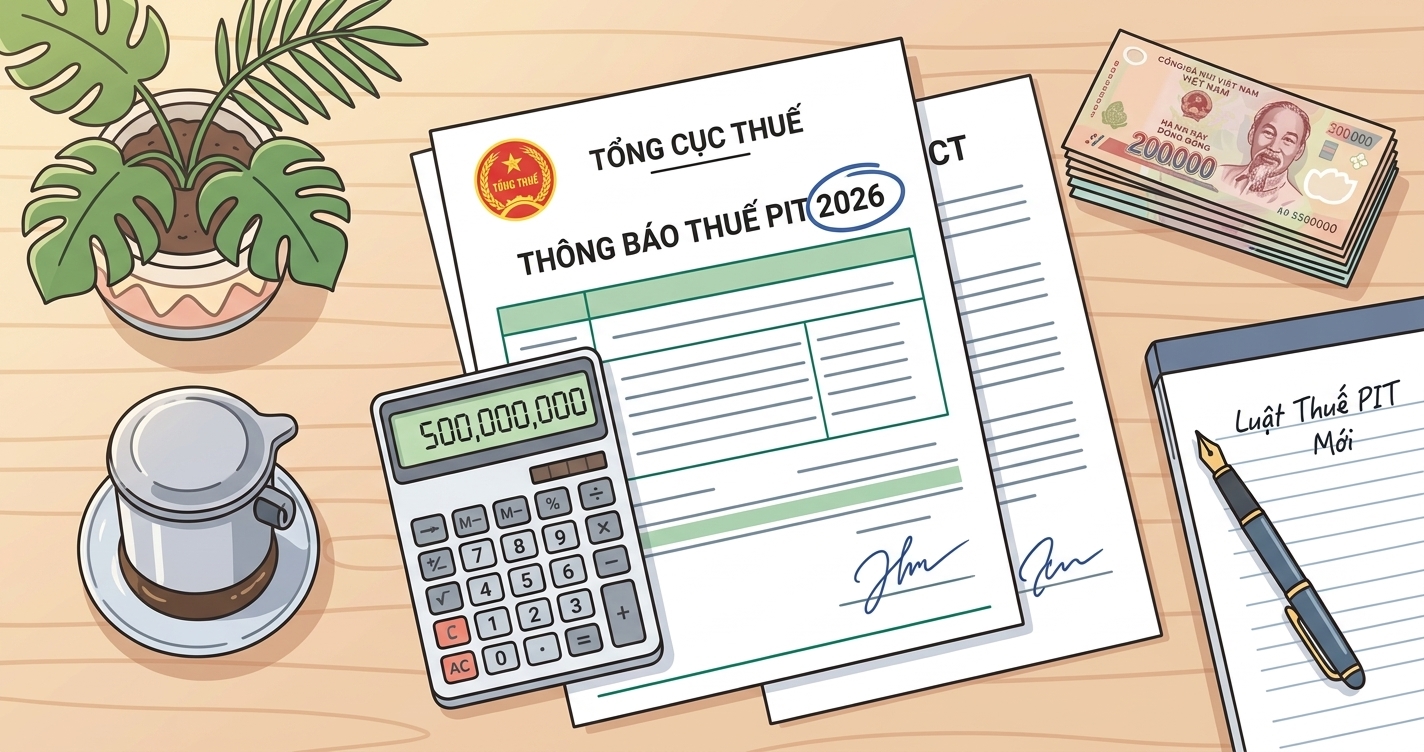

Vietnam Business Expense Deductions: What Freelancers and SMEs Can Claim in 2026
Sign up free to read the full articleVietnamese freelancers and small businesses can significantly reduce their Personal Income Tax bill by claiming allowable business expenses. This guide covers exactly what qualifies, how to document it, and how to claim it on your annual PIT settlement.
Disclaimer: This article provides general tax information for Vietnam and does not constitute individual tax advice. Tax rules change frequently. Always verify with the General Department of Taxation (GDT) or a licensed Vietnamese tax accountant before filing. Rates and thresholds cited are based on regulations in effect as of 2026.
Why Expense Deductions Matter for Vietnamese Freelancers
Vietnam taxes individual business income under the Personal Income Tax (PIT) law, with progressive rates ranging from 5% to 35% on net taxable income. Whether you are a freelancer (cá nhân kinh doanh), a sole proprietor, or a small business owner, the expenses you can deduct directly reduce your taxable profit — and with them, your tax liability.
Despite this opportunity, many Vietnamese freelancers either over-pay because they don't claim legitimate expenses, or face penalties because they claim expenses without proper documentation. This guide tells you what qualifies, what doesn't, and exactly how to record it.
The Two Business Income Tax Methods in Vietnam
Before diving into deductions, it's important to understand how your business income is taxed, because the deduction rules differ significantly between the two methods.
Method 1: Lump-Sum Tax (Thuế Khoán)
Under this method — the default for many small traders — the tax authority applies a flat deemed rate to your revenue. You cannot deduct individual expenses under this method; the deemed rate already accounts for an average cost structure. The PIT rates for lump-sum businesses are set by Circular 40/2021/TT-BTC:
- Distribution and supply activities: 0.5%
- Services and construction: 2%
- Production, transport, construction with materials: 1.5%
- Other activities: 1%
Method 2: Declared Income (Khai Thuế Theo Doanh Thu Thực Tế)
Under this method — available to individuals whose revenue exceeds ₫100 million per year, and optional for others — you keep full accounts, report actual revenue, deduct allowable expenses, and pay PIT on the resulting net profit. This is where expense deductions become powerful. Most freelancers earning above ₫100 million annually should be on this method and actively tracking expenses.
What Counts as an Allowable Business Expense?
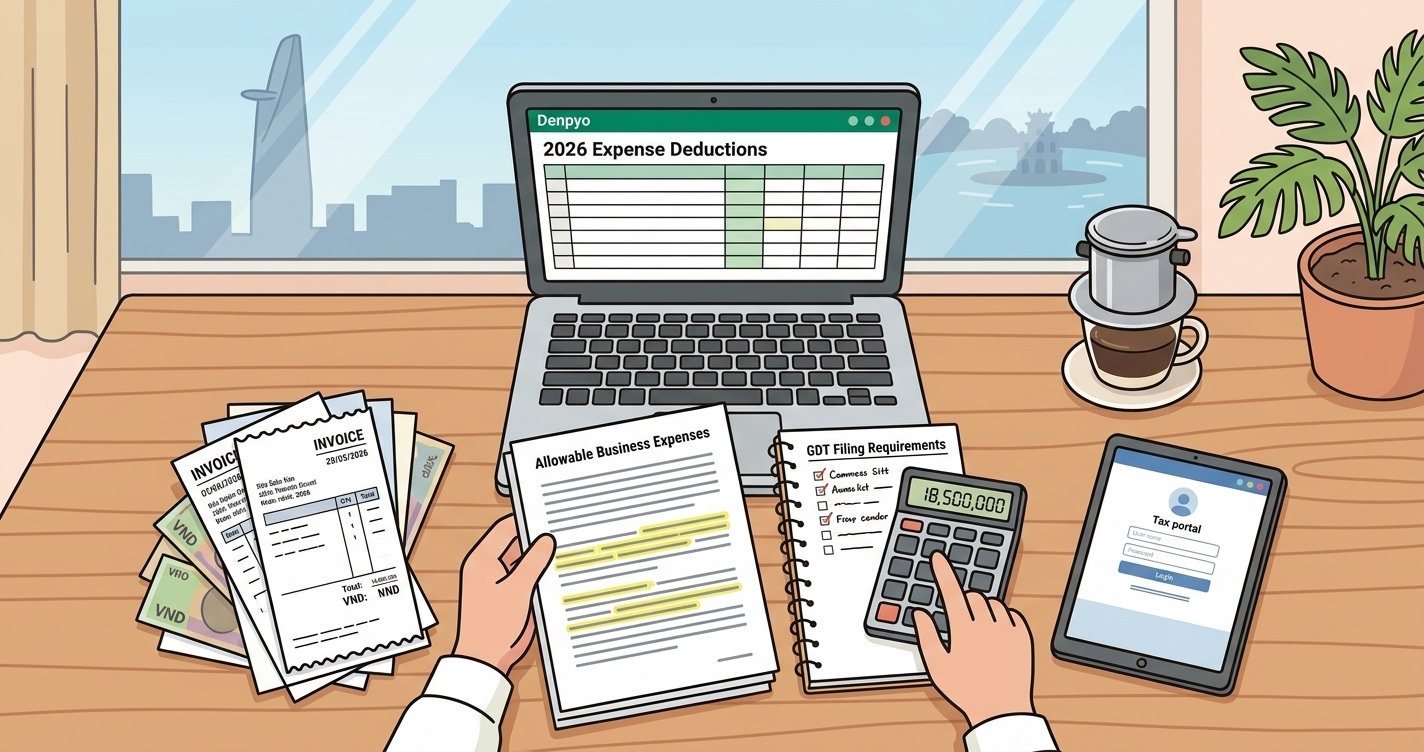
Under Circular 40/2021/TT-BTC and the Enterprise Law (Luật Doanh nghiệp), a business expense is deductible when it meets three criteria:
- Directly related to income-generating activities
- Actually incurred (not estimated or prepaid far in advance)
- Properly documented with valid invoices (hóa đơn hợp lệ) or receipts
20 Expense Categories Freelancers Can Deduct
Equipment and Technology
Laptop, desktop computer, tablet: Used for work. Keep the purchase invoice…
Read the rest of this article
Create a free Denpyo account to unlock the remaining sections and return to where you left off.
Already have an account? Log in
Eligible first-time subscribers get 7 days free. A payment card is required. Your plan renews automatically at the price shown at checkout unless you cancel before the trial ends.