
Gig Workers Act 2025: SESSS Mandatory Contributions Explained for Malaysian Freelancers
Malaysia's Self-Employment Social Security Scheme (SESSS) is now mandatory for gig workers under the Gig Workers Act 2025. Learn who is affected, contribution rates, and how to comply.
Disclaimer: This article is for general informational purposes only and does not constitute professional tax or legal advice. Regulations are subject to change. Please consult a qualified advisor or the Social Security Organisation (PERKESO/SOCSO) for guidance specific to your situation.
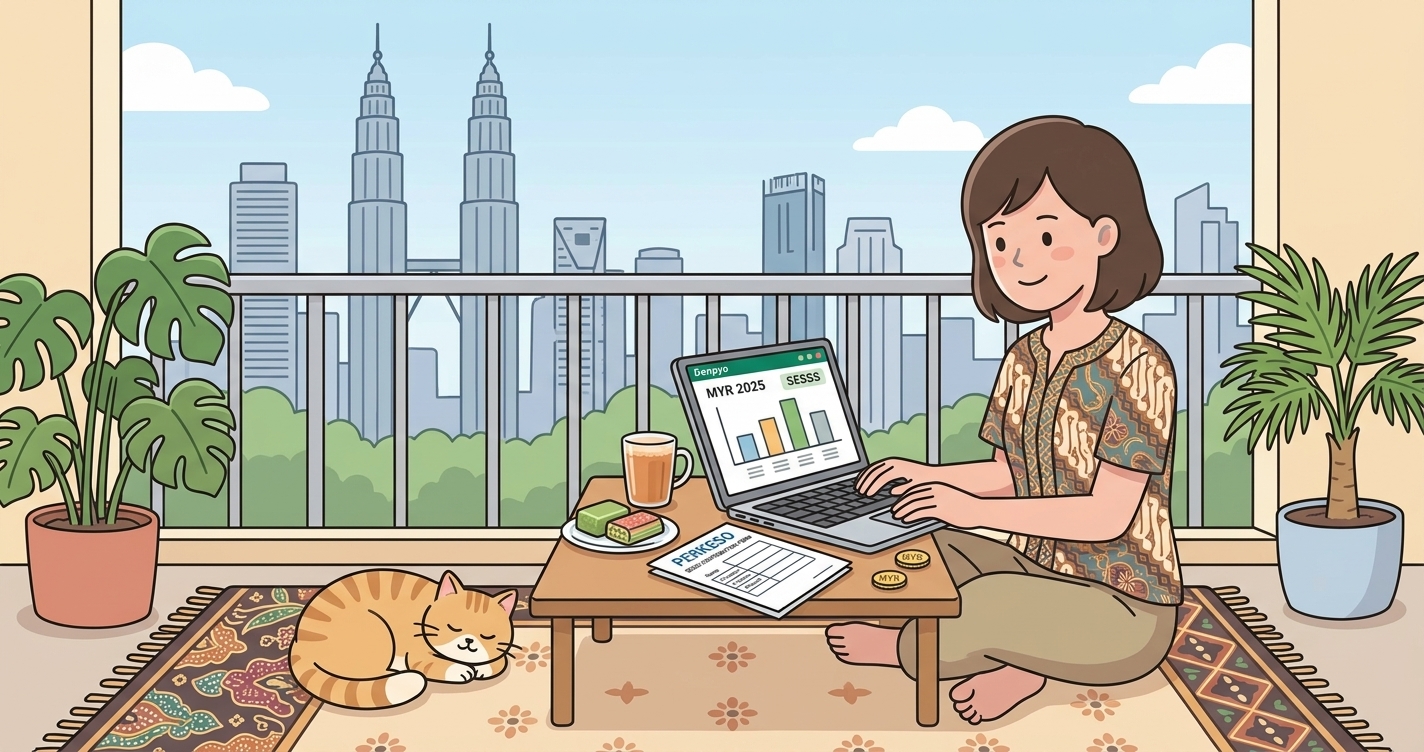
If you work as a freelancer, gig worker, or independent contractor in Malaysia, 2025 marked a turning point for your social safety net. The Self-Employment Social Security Act 2017, commonly known as the Gig Workers Act after its 2025 amendments, now makes participation in the Self-Employment Social Security Scheme (SESSS) mandatory for a broad range of gig economy and self-employed workers.
This is a significant shift. Previously, SESSS registration was voluntary for most self-employed individuals outside of a few designated sectors. Now, if you earn income through digital platforms, ride-hailing, delivery services, freelance marketplaces, or other gig arrangements, you are very likely required to register and contribute. Here is everything you need to know.
What Is SESSS?
The Self-Employment Social Security Scheme is administered by PERKESO (Pertubuhan Keselamatan Sosial / Social Security Organisation), the same body that manages SOCSO contributions for employees. SESSS provides self-employed and gig workers with protection against:
- Employment injury: Medical treatment, temporary and permanent disability benefits for work-related accidents or occupational diseases
- Invalidity: A pension for workers who become permanently unable to work due to any cause (not just work-related)
- Survivors benefits: Payments to dependents if the worker passes away
- Funeral benefit: A lump-sum payment to cover funeral expenses
- Education benefit: Annual payments for dependents' schooling
- Facilities for rehabilitation: Physical and vocational rehabilitation for injured workers
Think of it as social insurance — you contribute a small monthly amount, and in return you get a safety net that private insurance often does not cover at the same cost, particularly for work-related injuries and long-term disability.
What Changed Under the Gig Workers Act 2025
The original Self-Employment Social Security Act 2017 created SESSS as a voluntary scheme for self-employed persons in sectors designated by the Minister. Over time, the government expanded the list of covered sectors, but registration remained largely voluntary — and compliance was low.
The 2025 amendments, widely referred to as the Gig Workers Act, introduced three key changes:
1. Mandatory registration for platform workers
Workers who earn income through digital platforms — including ride-hailing (Grab, AirAsia Ride), delivery (Grab Food, Foodpanda, Lalamove), freelance marketplaces (Upwork, Fiverr, Freelancer.com), and e-commerce platforms — are now required by law to register with SESSS. This is no longer optional.
2. Platform operator obligations
Digital platform operators are now required to facilitate registration and contribution collection. Major platforms must deduct SESSS contributions from worker payouts or provide a mechanism for workers to contribute. This is similar to how employers deduct SOCSO contributions for employees. According to reporting by The Star and New Straits Times, enforcement began in phases from mid-2025.
3. Expanded coverage beyond platform work
While the headline focus is on platform gig workers, the Act also expanded the list of designated self-employed sectors. Freelancers in creative industries (graphic design, content creation, photography), professional services (consulting, tutoring, translation), and skilled trades (plumbing, electrical work, construction subcontracting) may also fall under mandatory coverage depending on specific gazette orders.
Who Must Register
You must register for SESSS if you meet any of the following criteria:
- You earn income through a digital gig platform registered in Malaysia
- You are a self-employed person in a sector designated under the Self-Employment Social Security Act 2017 (as amended)
- You are a freelancer providing services to multiple clients without a formal employment contract
The law applies to Malaysian citizens and permanent residents aged 18 to 65. Foreign workers on gig platforms may also be required to register depending on their permit status — consult PERKESO directly if you are unsure.
Am I really a gig worker?
If you are a freelance graphic designer who gets clients through your own website, or a consultant who invoices companies directly, you may wonder whether the Act applies to you. The answer depends on whether your sector has been gazetted. The safest approach: check the latest list of designated sectors on the PERKESO website or contact their hotline. When in doubt, voluntary registration is available and gives you access to the same benefits.
Contribution Rates and How Payment Works
SESSS contributions are based on your declared monthly insured income. Unlike SOCSO for employees (where both employer and employee contribute), SESSS contributions are paid entirely by the self-employed worker — though platform operators may facilitate deductions from your earnings.
The contribution table is structured as follows:
- Monthly insured income RM1,050 or below: RM13.10/month
- RM1,050 – RM2,000: RM26.20 – RM36.90/month
- RM2,000 – RM4,000: RM36.90 – RM72.80/month
- RM4,000 and above: contributions scale up to a maximum based on the highest insured income bracket
The exact rates are updated periodically by PERKESO. You can check the current contribution schedule on the PERKESO SESSS page.
For most freelancers earning between RM3,000 and RM5,000 per month, the contribution works out to approximately RM50–RM90 per month — a modest cost for the coverage provided.
How to pay
Contributions can be made through:
- Platform deduction: If your platform (e.g., Grab) has integrated SESSS, contributions are automatically deducted from your payouts
- PERKESO portal: Self-registration and payment through the PERKESO Self-Employment portal
- Over-the-counter: Payment at PERKESO offices, post offices, or authorized agents
Benefits You Receive
For a monthly contribution of RM50–RM90, here is what you are protected against:
Employment Injury Scheme
- Medical benefits: Free treatment at government or panel hospitals for work-related injuries or occupational diseases — no co-pay, no limit on duration
- Temporary disablement benefit: 80% of your average daily insured income for each day you cannot work due to a work-related injury, paid for up to 12 months
- Permanent disablement benefit: A monthly pension if you suffer permanent disability from a work-related incident, calculated based on the degree of disability and your insured income
- Constant attendance allowance: Additional payments if your disability requires ongoing personal care
Invalidity Scheme
- Invalidity pension: A monthly pension if you become permanently unable to work due to any cause (not limited to work injuries), calculated at 50% of your average monthly insured income
- Invalidity grant: A lump sum if you do not qualify for the pension due to insufficient contribution months
Survivors and Other Benefits
- Dependents benefit: Monthly payments to your spouse and children if you pass away
- Funeral benefit: RM2,000 lump sum (as of 2025; subject to revision)
- Education benefit: Annual payments for children of deceased or permanently disabled contributors
How SESSS Affects Your Tax Filing
SESSS contributions are tax-deductible against your business income when filing your annual Form B with LHDN (Lembaga Hasil Dalam Negeri / Inland Revenue Board of Malaysia). This means your contributions reduce your taxable income, providing a small but meaningful tax benefit on top of the social security coverage.
When calculating your deductible business expenses, include your total annual SESSS contributions alongside other deductions like office rent, supplies, and professional fees. You can use the Denpyo expense deductibility checker to verify which expenses qualify for deduction under Malaysian tax law.
Keep your PERKESO contribution receipts or payment confirmations as part of your tax records. LHDN requires you to retain records for 7 years, so store these digitally along with your other business expense documentation.
Registration: Step by Step
If your platform has not automatically enrolled you, here is how to register yourself:
Step 1: Prepare your documents
- MyKad (Malaysian identity card) or passport for permanent residents
- Business registration number (if applicable — sole proprietors registered with SSM)
- Bank account details for benefit payments
- Details of your self-employment activity or platform(s)
Step 2: Register online
Visit the PERKESO Self-Employment Portal and create an account. Complete the registration form with your personal details, income declaration, and preferred payment method.
Step 3: Declare your income bracket
Select the monthly insured income bracket that best reflects your average monthly earnings. This determines your contribution rate and benefit level. You can adjust this annually if your income changes.
Step 4: Set up payment
Choose your payment method — automatic platform deduction, online banking through the portal, or manual payment. Monthly contributions are due by the 15th of the following month.
Penalties for Non-Compliance
The Gig Workers Act 2025 introduced enforcement mechanisms for non-compliance:
- Workers: Failure to register when required may result in fines. More importantly, you forfeit your right to claim benefits for any period you were not contributing.
- Platform operators: Platforms that fail to facilitate registration and contribution collection face penalties including fines and potential operating restrictions.
The practical risk for individual freelancers is less about fines and more about losing coverage. If you are injured while working and you are not registered, you cannot claim medical benefits, temporary disability payments, or any other SESSS benefit. Given the low cost of contributions, the risk-reward calculation strongly favors compliance.
SESSS vs EPF (i-Saraan Plus): Understanding the Difference
Malaysian freelancers now have two key social protection schemes available:
- SESSS (PERKESO): Social security — covers work injuries, disability, survivors benefits. Mandatory under the Gig Workers Act for covered workers.
- EPF i-Saraan Plus: Retirement savings — voluntary contributions to the Employees Provident Fund with government matching of up to RM500/year. Voluntary (though strongly encouraged).
These two schemes serve different purposes and are complementary, not alternatives. SESSS protects you during your working life (injuries, disability, death). EPF protects your retirement. Ideally, you should participate in both.
Practical Tips for Freelancers
- Register now, even if enforcement has not reached your sector yet. Coverage begins from your registration date, not retroactively. The sooner you register, the sooner you are protected.
- Declare realistic income. Under-declaring to minimize contributions also reduces your benefit amounts if you ever need to claim. Be honest about your earnings.
- Track your contributions as a business expense. Every SESSS payment is tax-deductible. Tools like Denpyo can capture your PERKESO payment receipts and categorize them automatically for tax filing season.
- Review your income bracket annually. If your freelance income has grown (or shrunk), adjust your declared income to ensure appropriate coverage and contributions.
- Combine with private insurance if needed. SESSS provides a solid base layer of protection, but it does not cover everything — for example, it does not include health insurance for non-work-related illnesses. Consider topping up with a private medical card or hospitalization plan.
- Keep contribution records for 7 years. LHDN requires this for tax audit purposes. Digital storage makes this painless — photograph or save your PERKESO statements alongside your other expense records using the Denpyo tax savings estimator to see how your deductions add up.
Summary
The Gig Workers Act 2025 represents a major step forward in social protection for Malaysia's growing freelance and gig economy workforce. SESSS is no longer optional for most platform workers and an expanding list of self-employed professionals. The scheme provides meaningful coverage — work injury protection, disability pensions, and survivors benefits — at a cost of roughly RM50–RM90 per month for the average freelancer.
For Malaysian freelancers and SME owners, the action items are clear: register with PERKESO if you have not already, set up regular contributions, and include those contributions as deductible expenses in your annual Form B filing. The coverage is worth far more than the cost, and compliance is both a legal obligation and a sound business decision.
Track expenses, maximize deductions
Denpyo scans your receipts and finds tax savings automatically.
More Articles
View All Articles
IRAS Audits & Record Requests: A Freelancer's Readiness Guide (Singapore, 2026)
5 min read
2-Line vs 4-Line Statement: Reporting Business Income to IRAS 2026
4 min read