
Japan's Small-Asset Full-Expensing Limit Rises to Under ¥400,000 (FY2026)
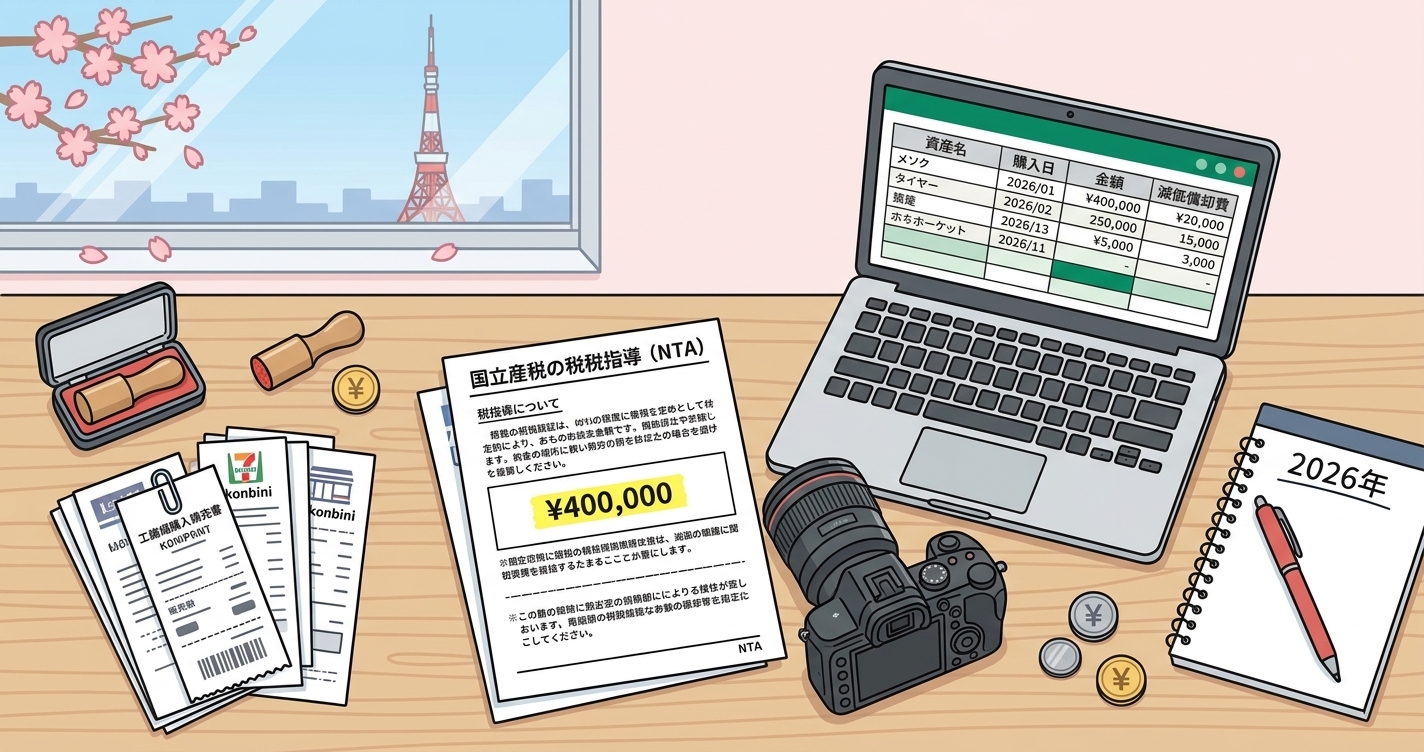
The FY2026 reform raised Japan's small-amount depreciable asset exemption from under ¥300,000 to under ¥400,000. Here is who qualifies, the conditions, and the tax savings for freelancers and SMEs.
This article is general information, not individual tax advice. Whether the small-amount depreciable asset exemption applies to your situation should be confirmed against the latest National Tax Agency (NTA) guidance and with a licensed tax professional.
Ever bought a laptop, camera, or piece of equipment and wished you could deduct the whole cost in one go? For Japanese freelancers, sole proprietors, and small businesses, the small-amount depreciable asset exemption lets you do exactly that. And under the FY2026 (Reiwa 8) tax reform, the qualifying purchase price was raised from under ¥300,000 to under ¥400,000, with the measure extended for three more years. Here is what changed, who qualifies, and how much tax you can actually save.
What the exemption is
Normally, equipment costing ¥100,000 or more is treated as a fixed asset and written off gradually over its useful life through depreciation. A laptop with a four-year useful life, for example, cannot be fully expensed in the year of purchase.
The exemption (Article 28-2 of the Act on Special Measures Concerning Taxation for individuals; Article 67-5 for companies) lets blue-return small businesses, including sole proprietors, deduct the full purchase price in the year of acquisition. Front-loading the expense reduces taxable income in a profitable year, which in turn lowers your income tax, residence tax, and national health insurance premiums.
What changed under the FY2026 reform
- Threshold raised to under ¥400,000: previously under ¥300,000. Equipment in the ¥300,000s can now be fully expensed at once.
- Extended three years: the deadline moved from 31 March 2026 to 31 March 2029.
- The threshold depends on the purchase date: assets acquired on or after 1 April 2026 use the "under ¥400,000" line; assets acquired before that date keep the old "under ¥300,000" line. Even within 2026, a purchase in March versus April is judged differently.
- Employee cap lowered to 400: for acquisitions from 1 April 2026, the limit on regular employees dropped from 500 to 400. This rarely affects freelancers or micro-businesses.
The change is documented in the Ministry of Finance FY2026 Tax Reform Outline and the SME Agency guide.
Conditions for using the exemption
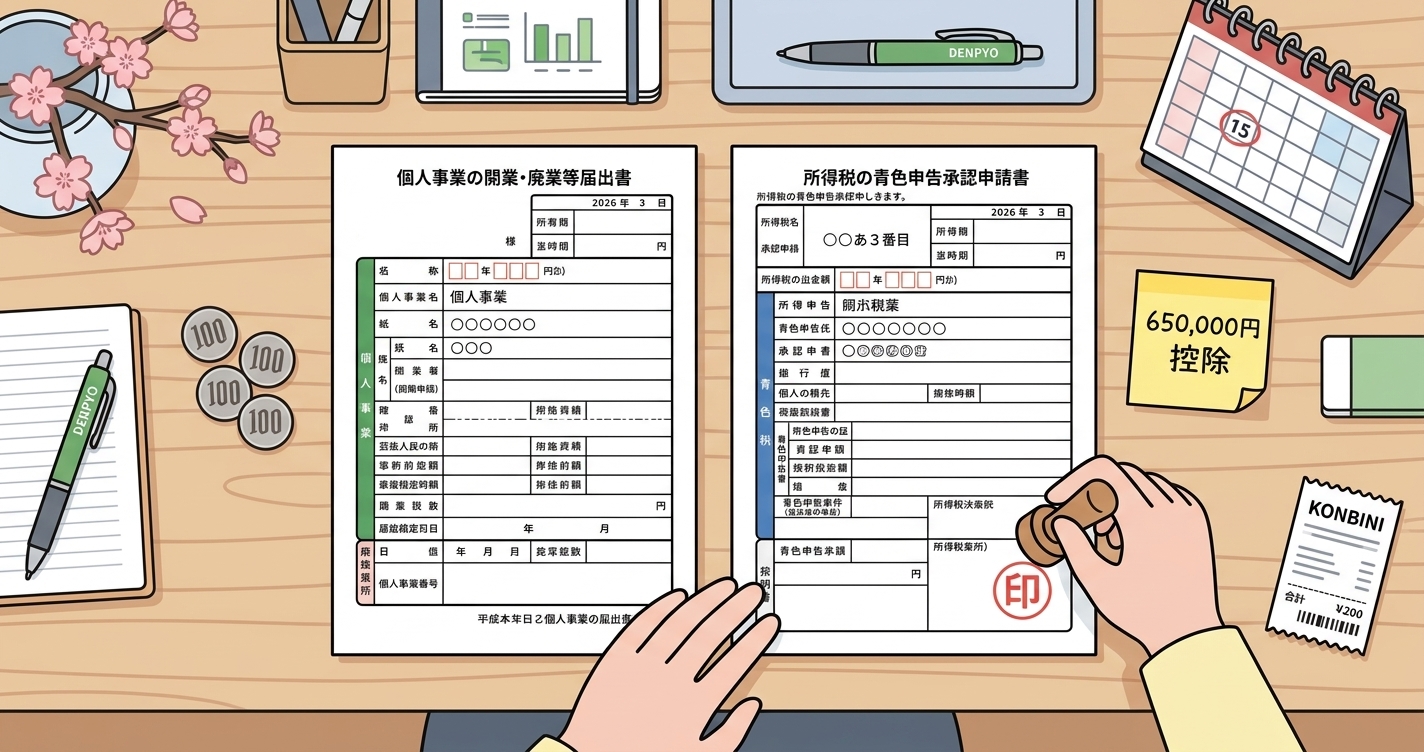
- You must file a blue return: white-return filers cannot use it. If you have not switched, the savings often make it worth doing.
- Purchase price under ¥400,000: judged tax-exclusive or tax-inclusive depending on your consumption-tax accounting method.
- Acquired and put into business use in the year: buying is not enough; you must actually start using it for work.
- Annual cap of ¥3,000,000: the total you can expense under the exemption in one year is capped at ¥3 million; anything above reverts to normal depreciation.
- Attach the detail to your return: list the asset in the depreciation schedule of your blue-return financial statement and note "措法28の2" in the remarks.
A worked example
Suppose A, a freelance video editor, buys a ¥380,000 laptop in June 2026. Because it is under ¥400,000, it qualifies.
- Using the exemption: the full ¥380,000 is expensed in 2026. At a combined income- and residence-tax rate of roughly 20%, that is about ¥76,000 in tax saved.
- Normal depreciation: spread over four years, with only a partial deduction in year one. The benefit is diluted across several years.
A ¥350,000 work camera or a ¥280,000 desk set can likewise be fully expensed in the year of purchase, as long as you stay within the ¥3 million annual cap. Concentrating equipment purchases in a high-profit year magnifies the effect. To estimate your own saving, try the tax savings estimator.
How it compares with pricier assets
Assets of ¥400,000 or more revert to ordinary depreciation. Items from ¥100,000 to under ¥200,000 also have an alternative, the "lump-sum depreciable asset" method (even three-year write-off). Which route is better depends on your profit picture, so when in doubt use the expense checker and consult a professional.
Receipts and bookkeeping are the key
To use the exemption reliably you must keep evidence showing the price, purchase date, and date put into use (receipts and invoices). Under Japan's Electronic Bookkeeping Law, invoices received electronically must be stored electronically, and paper receipts can be kept via scanner storage.
Tools like Denpyo let you snap a photo of the receipt the moment you buy the gear; the AI reads the date, amount, and expense category automatically and helps you flag whether it is a fixed asset or a small-amount asset. That removes the year-end scramble of entering a shoebox of receipts and makes tracking the ¥3 million cap far easier. Capturing every expense is, in effect, capturing every bit of tax saving.
Summary
The FY2026 reform expanded the small-amount depreciable asset exemption to under ¥400,000, running through 31 March 2029. Equipment in the ¥300,000s acquired on or after 1 April 2026 can now be fully expensed at once — great news for businesses that invest in gear. Remember the three pillars: blue return, ¥3 million annual cap, and the purchase-date threshold; digitise receipts as you go; and always confirm the current treatment with the NTA.
Track expenses, maximize deductions
Denpyo scans your receipts and finds tax savings automatically.